Mastering Role Alignment: Effective Templates for Construction Teams
Discover effective templates for a role alignment model to enhance construction team efficiency.

Leading versus Following
There are really only two kinds of project managers – those who lead and those who follow.
Our research and experience with construction companies of all kinds and all sizes over the last two decades has uncovered some key differences in the “hardwiring” of these two different project managers.
At the top of the list is the apparent contrast in the “maintenance” of the project manager.
Project managers who are better at “following” require much more input, oversight, and intervention from their supervising managers. The supervising manager is more frequently asked for assistance in making project decisions whether it is project material purchases, scope of subcontracts, or negotiating scope of project changes with the owners and project consultants. Consistently these project managers are uncomfortable with tension or conflict and too often avoid holding people accountable for meeting
schedules, providing project documentation, and managing costs.
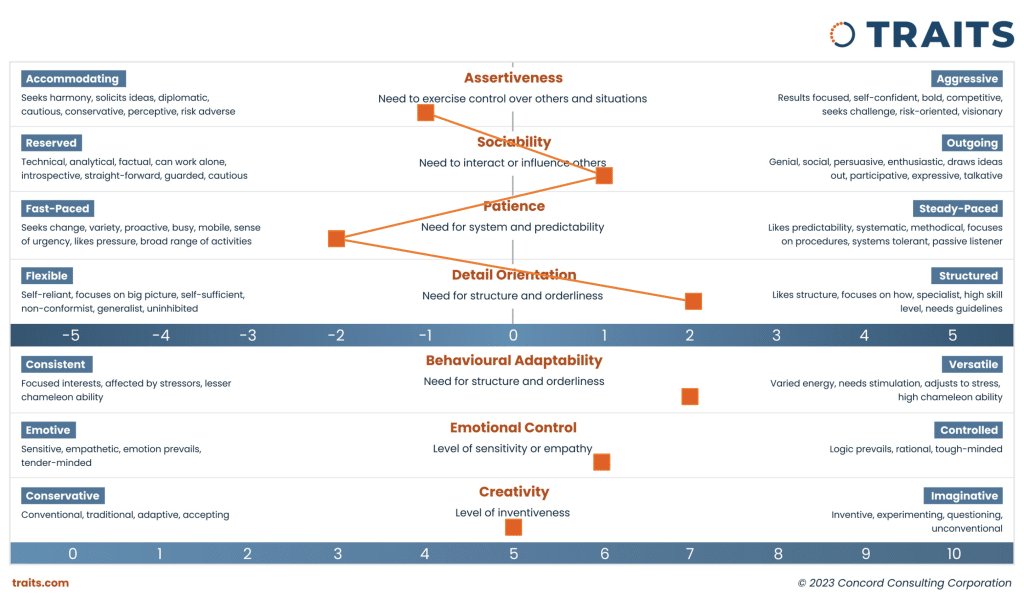
The behaviour that seems to be absent from these project managers is a trait called assertiveness. It’s the project manager’s lower level of assertiveness that makes it more difficult for them to take risk. Making decisions and holding others accountable has risk (decisions could be wrong, others may disagree with you, others may push back) and these project managers are not “hardwired” to naturally cope with risk.
Consequently, a disproportionate amount of the supervising manager’s time is required to support and back up these project managers to ensure the project results are achieved. This unfortunately comes at a cost for the supervising manager because they become stretched too thin and have less time to concentrate on other job responsibilities.
Resumes and even interviews don’t give us insight into how a person handles risk, or their level of assertiveness. Experience doesn’t translate into an ability to lead.
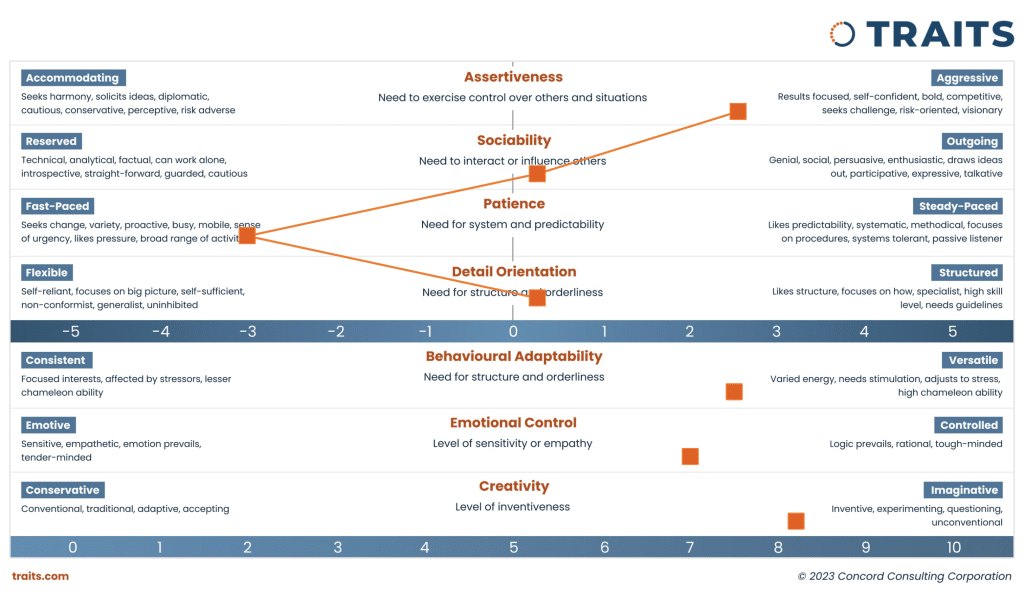
Project managers who are naturally inclined to “leading” have a very different impact on their supervising managers. They demonstrate an ability to be more “future focused” in their day-to-day activities. For example, they are able to develop construction schedules that often lead to completing projects earlier than originally expected, which is a win for the client and the contractor. In addition, decision-making, including decisions with risk attached, are seldom referred upwards, unless it is a new set of conditions that the project manager decides needs more judgement. And even in most of those conditions they have already identified what they think might be the best option going forward.
Instinctively, these project managers know they need to hold others accountable and apply the right level of assertiveness or insistence to ensure commitments are adhered to. They also ensure the right sub-trade construction personnel are on site consistently, that materials arrive as required, and that any changes to the scope of the work are fully documented and billed to the owner.
Their performance is rewarded with increasingly complex and larger projects because their supervising manager recognizes that these project managers are able to handle more responsibility and are independent enough to carry out their day-to-day job responsibilities.
However, sometimes promotions can cause a lot of job dissatisfaction and stress. This is especially true when project coordinators who are more natural at “following” are promoted into project management positions.
This caused us to study the difference between a project coordinator position and a project manager position.
In many construction companies, the project coordinator position focuses on supporting the project manager and carrying out administrative tasks. Such activities include soliciting shop drawings from suppliers, preparing subcontractor documentation, preparing minutes for site meetings, and preparing the required paperwork for scope of work changes etc.
Interestingly, most project coordinator positions do not require a higher level of assertiveness to meet the job position objectives and activities. Most decisions in this role do not carry risk, meaning there is little accountability to ensure specific schedules are met, and no requirement to manage the costs of the project.
What we have also observed is that some construction companies promote project coordinators into project management positions. This is done because it is assumed that if the project coordinator knows how to read drawings, specifications, and may even have some estimating experience, they should be able to carry out the project management role.
Unfortunately, a few months into the promotion, the supervising manager finds that the newly promoted project manager is struggling with the required higher-level assertiveness necessary to be “leading”. This means the supervising manager will need to step in more to compensate.
Construction companies that continue to grow will eventually need both full time project managers and project coordinators. However, assuming that a good project coordinator can make a good project manager is not necessarily true. We prepared job models of the “best” project coordinators and “best” project managers from a range of construction companies (Fig. 1 and Fig. 2 below) and discovered that both roles have some very important differences in terms of “personality”.

Discover effective templates for a role alignment model to enhance construction team efficiency.

Create a template for a role success profile to enhance recruitment and team performance.

Discover essential components for an effective template for a role requirements model.
